> For the complete documentation index, see [llms.txt](https://docs.openg2p.org/llms.txt). Markdown versions of documentation pages are available by appending `.md` to page URLs; this page is available as [Markdown](https://docs.openg2p.org/1.1/guides/user-guides/create-notification-manager-types/create-email-notification-manager.md).
# Create Email Notification Manager
## Description
This guide will provide the steps to create an Email Notification Manager.
## Pre-requisites
The user should have a Program Manager role assigned.
## Steps
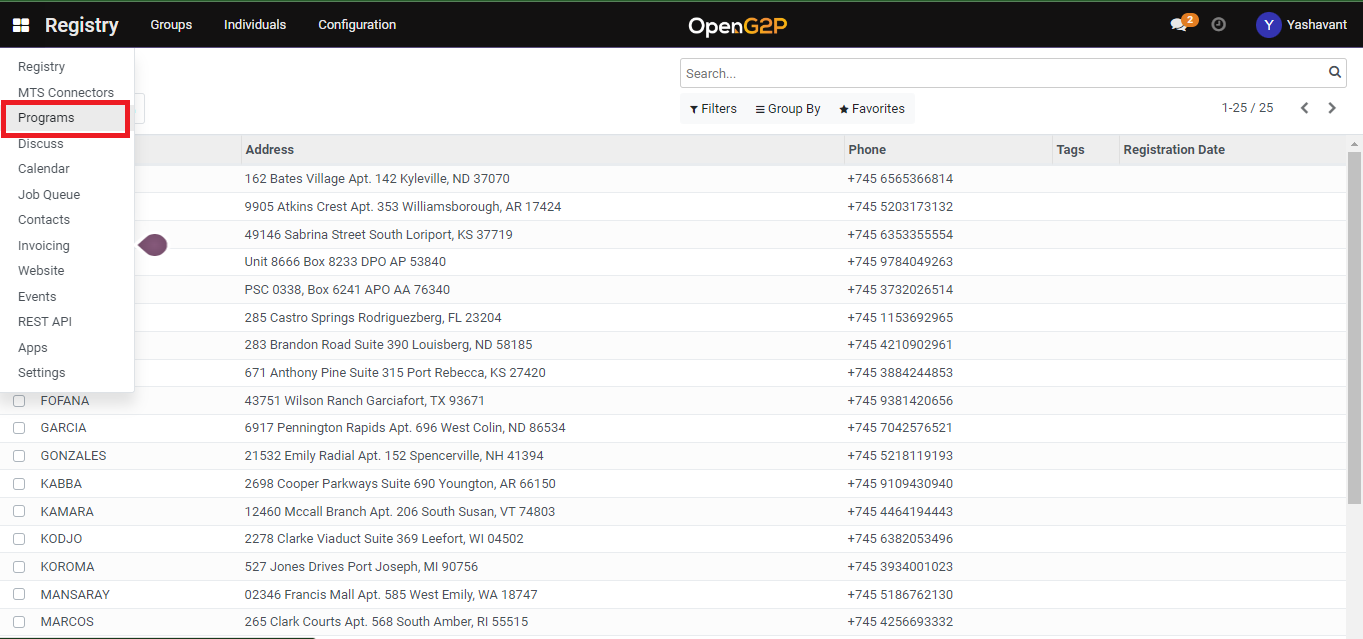
1. Navigate to *Programs* using the menu bar.
2. Click on *Configuration* and select *Email Notification Manager.*
3. Click the *Create* button to go to the Email Notification Managers view.
4. Enter the *Name* and *Program* in the *Email Notification Managers* view.
5. The view allows the configuration of a template for each of these event types:
* *On Enrolled In Program Template*
* *On Cycle Started Template*
* *On Cycle Ended Template*
* *On Otp Send Template*
* *On Generate Voucher Template*
There are two ways to configure a template for an event:
a. Use an existing template: Go to step#6.
b. Create a new template: Go to step#7.
6. Click on the drop-down button and select the template from the drop-down list. Go to step#11.
7. Enter a name for the new template. When a non-existing template name is entered, the option *Create and Edit* appears. Click on this option\_.\_
8. A new dialogue box appears. Enter the details.
* *Name*: Name of the template
* *Applies to*: Applicable context; For example, the option *Contact* sends the mail to the beneficiary email
* *Content*: *Subject* and matter for the email written using the Odoo platform's [QWeb](https://www.odoo.com/documentation/16.0/developer/reference/frontend/qweb.html) templating engine
* *Attachments*: Attachments to be sent with the email
9. Click on *the Email Configuration* sub-tab.
* *From*: Author's email id
* *Default Recipients*: Enable the box to send email to default recipients
* *To (Emails)*: Recipient email address
* *To (Partners)*: Comma-separated emails of the program partners
* *Cc*: Comma-separated emails of the recipients to be copied for this email
* *Reply To*: The email that the recipient can reply to
* *Scheduled Send Date*: The date on which the mail will be sent
10. Click on the *Advanced Settings* sub-tab.
* *Language*: Language for the content
* *Outgoing Mail Server*: Outgoing mail server
* *Auto Delete*: If enabled, the email is deleted automatically
* *Optional report to print and attach:* Optional field for reports
11. Optionally, enable the checkbox *Send Immediately* to send the email notification to beneficiaries immediately after the program enrollment, at the start of the cycle, and at the end of the cycle.
12. Click on *Save*.
---
# Agent Instructions
This documentation is published with GitBook. GitBook is the documentation platform designed so that both humans and AI agents can read, navigate, and reason over technical content effectively. Learn more at gitbook.com.
## Querying This Documentation
If you need additional information that is not directly available in this page, you can query the documentation dynamically by asking a question.
Perform an HTTP GET request on the current page URL with the `ask` query parameter, and the optional `goal` query parameter:
```
GET https://docs.openg2p.org/1.1/guides/user-guides/create-notification-manager-types/create-email-notification-manager.md?ask=&goal=
```
`ask` is the immediate question: it should be specific, self-contained, and written in natural language.
`goal` is optional and describes the broader end goal you are ultimately trying to accomplish on behalf of the user. GitBook uses it to tailor the answer towards what is most useful for that goal.
The response will contain a direct answer to the question and relevant excerpts and sources from the documentation.
Use this mechanism when the answer is not explicitly present in the current page, you need clarification or additional context, or you want to retrieve related documentation sections.